Planning with AI
How AI is helping shape wedding planning
You might know how you want your wedding to feel before you know how to explain it. A colourful ceremony. A meal where everyone feels welcome. Two traditions that both have room to breathe.
Then come the decisions: which ideas belong together, what to show your suppliers and how to organise the people and details around them.
AI can help you work through parts of that process. It can compose a visual direction, help you explore it and support the practical planning that follows. The useful question is where it helps you take your next step.
Here is how that can look when you are planning a wedding in the UK.
1. Making your wedding ideas visible
Words such as romantic, modern or colourful leave plenty open to interpretation. Seeing a direction gives you something more specific to respond to. You can point to a colour, a shape or the atmosphere of a room and decide whether it feels like you.
In makemywedding.ai, Atlas composes seven concept boards: venue, attire, florals, tablescape, food and drink, cake, and celebrations. Each contains four images composed to your style, season, region, palette and budget.
Start by asking what you actually like in each image. Is it the soft light, the flowers or the way the table is arranged? Naming that detail helps you separate your priorities from everything else in the picture.
Treat the concept as the beginning of a design conversation. Ask your suppliers how they would interpret it in your space and with the budget you have available.
For a closer look at choosing and organising your references, read how to create a wedding mood board.
2. Exploring the details before you settle on a direction
You can like the overall feeling of a concept while wanting to change one part. Perhaps the flowers feel too formal, or you would prefer a quieter colour palette.
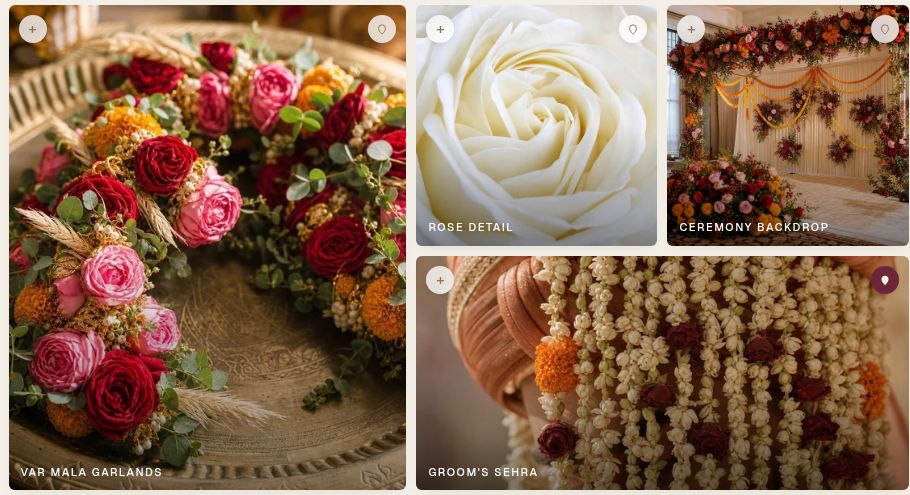
Being able to adjust an image gives you another way to explore that preference. In makemywedding.ai, changes happen from the image itself: you can adjust a detail or re-imagine the shot. Talking to Atlas for advice never uses a generation.
Give each change a purpose. Try changing one detail, then compare what you prefer. When an image communicates the direction you want, keep it as a reference for the next conversation.
You do not need to resolve every stem and place setting before speaking to a supplier. Leave room for their materials, ideas and experience.
3. Bringing your traditions into the planning
A wedding plan needs to make sense for the celebration you are actually having. That includes the meaning of your ceremony, the food you serve and the events that bring everyone together.
When choosing a planning tool, look at how it handles those details. Can you see your ceremony represented? Does the language fit? Is there room for both traditions if you and your partner are bringing different backgrounds together?
makemywedding.ai supports twelve wedding styles, including Hindu, Sikh, Muslim, Jewish, Catholic and fusion. Cultural detail is composed in, including ceremony structures and dietary law, with religious objects never used as decoration.
Your own practice still belongs in the conversation. Tell suppliers which elements matter to you, and check ceremony details with the person leading it. If dietary requirements apply, describe them directly to your caterer and ask how they will be met.
For a wedding with several events, name each one in your brief. A shared palette can connect the celebrations while each keeps its own purpose and atmosphere.
4. Turning inspiration into a supplier brief
A collection of images becomes more useful when a supplier knows what you want them to take from it.
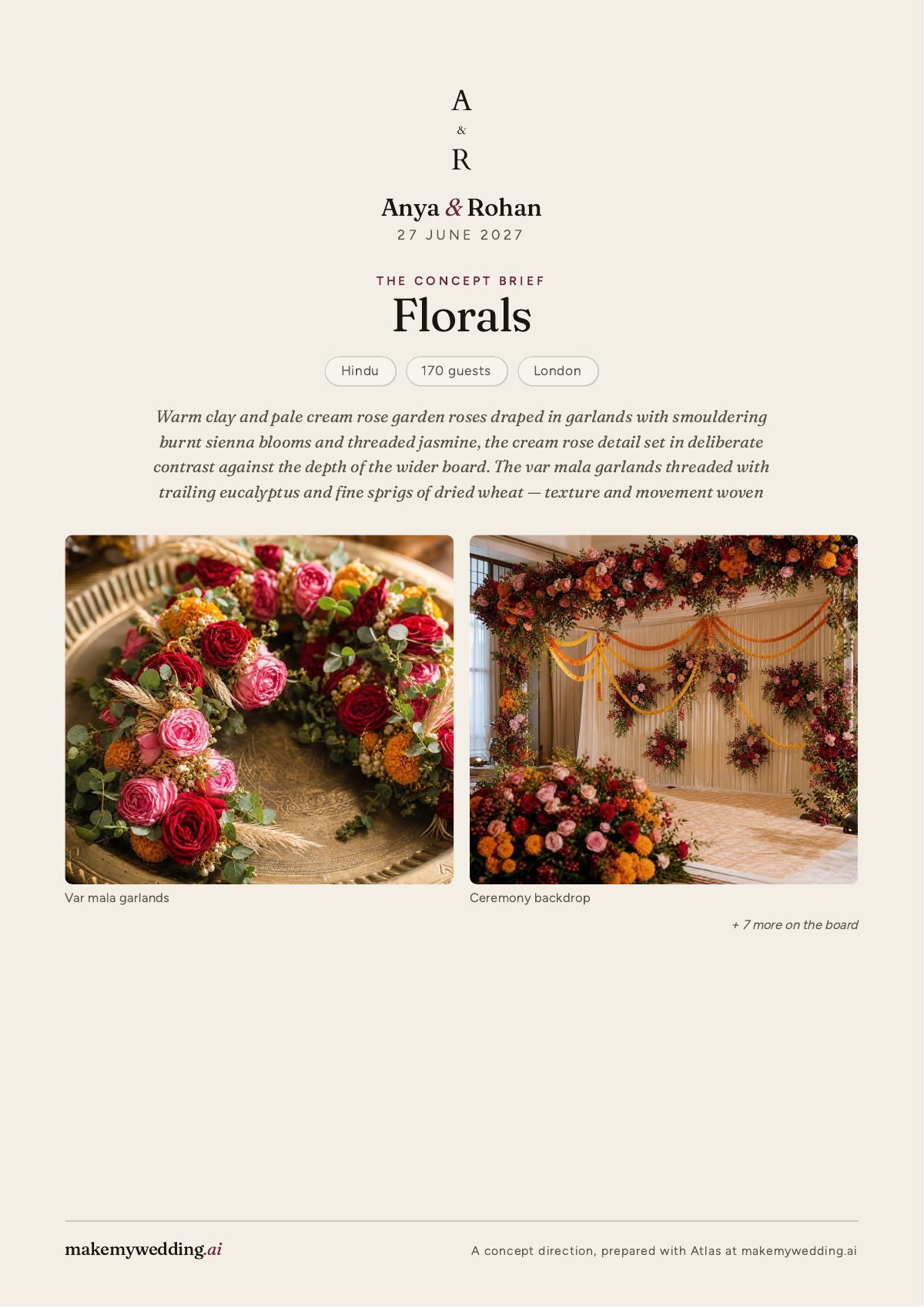
In makemywedding.ai, you can pin the images you love and turn those pins into a supplier-ready PDF brief for each board. That gives your florist, cake maker or another supplier a focused visual starting point.
Send the practical details alongside it. For example:
We would like to explore these colours for the ceremony flowers. The loose shape is what we love most. Please suggest how you would adapt the arrangement for our space and tell us what information you need to quote.
Add your date, location, the pieces you need, approximate quantities and your priorities. Be clear about what is decided and where you would welcome suggestions.
Our guide to what to include in your wedding florist brief includes an exported example and the practical details to send with it.
5. Giving your supplier shortlist some context
A supplier search is more useful when you can understand why a particular business might suit your wedding.
makemywedding.ai offers ranked vendor matching across nine categories, with the reasoning shown. Those categories include venues, florists, caterers, decor, photography and film, cake makers, mobile bars, DJs, and hair and make-up.
Use a match as a reason to look closer. Read the explanation, explore the supplier's own work and prepare questions about what matters to you. Ask directly about availability, pricing and experience with the celebration you are planning.
You send the enquiry yourself. Venue enquiries are free; supplier enquiries are on Engaged. A shortlist helps you begin the conversation, and the supplier can confirm what they can offer.
6. Connecting the ideas to the practical plan
Once you have a visual direction, there are still guests to organise, tables to arrange and a running order to agree.
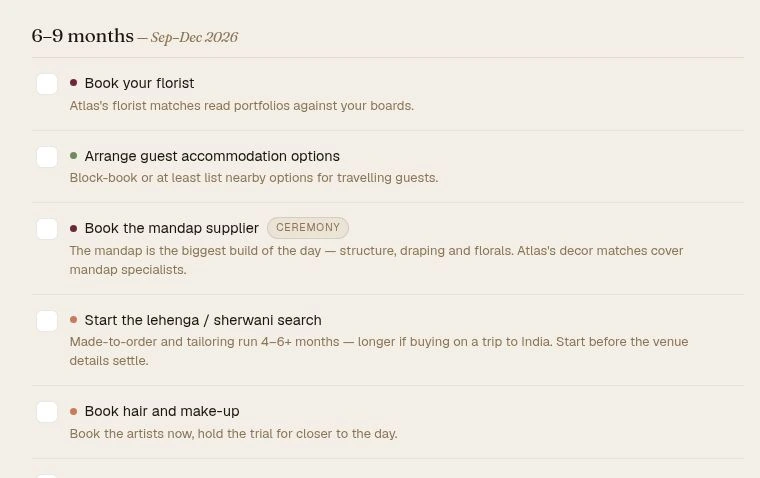
A wedding planning platform can bring those practical tools alongside your creative work. In makemywedding.ai, these include a guest list organised by household, a tradition-aware checklist, seating with auto-arrange and a day schedule. There is also a themed wedding website with RSVP built in and places to stay with Google Maps links.
These tools have different jobs. RSVP links collect replies; a schedule records the order of the day; auto-arrange helps with seating. Keeping the purpose of each clear helps you choose the support you need.
Review the practical plan with the people involved. Check timings with suppliers and the ceremony lead. Look through seating with your partner. You know the relationships and priorities behind the names on the list.
What should stay with you and your suppliers?
Use AI to explore possibilities and prepare for decisions. Give your suppliers the opportunity to explain what those ideas involve in practice.
Before committing to a direction, ask:
- What do we love about this idea, and what can change?
- Can it work in our venue and on our date?
- What would the supplier recommend within our budget?
- Have we explained our ceremony and dietary requirements clearly?
- Do both of us feel represented in the plan?
AI can support the preparation. Your conversations with each other, your families and the people helping with the wedding give those plans their meaning.
Start with one part of your wedding
Choose the decision that would help you move forward today. It might be the ceremony setting, the flowers or the atmosphere of the meal.
Explore a direction, choose what matters and give the next person something clear to respond to.
Explore makemywedding.ai or take a look at the concept boards and planning tools.
Spark is free with usage limits. Engaged is £29 a month, cancel any time.